Inside Ecuador’s Biennale Pavilion: What It Really Takes to Get to Venice
What does it actually take to bring a national pavilion to the Venice Biennale? Beyond the finished exhibitions lies a complex, high-stakes process—part logistics, part diplomacy, part creative vision—rarely seen by the public.
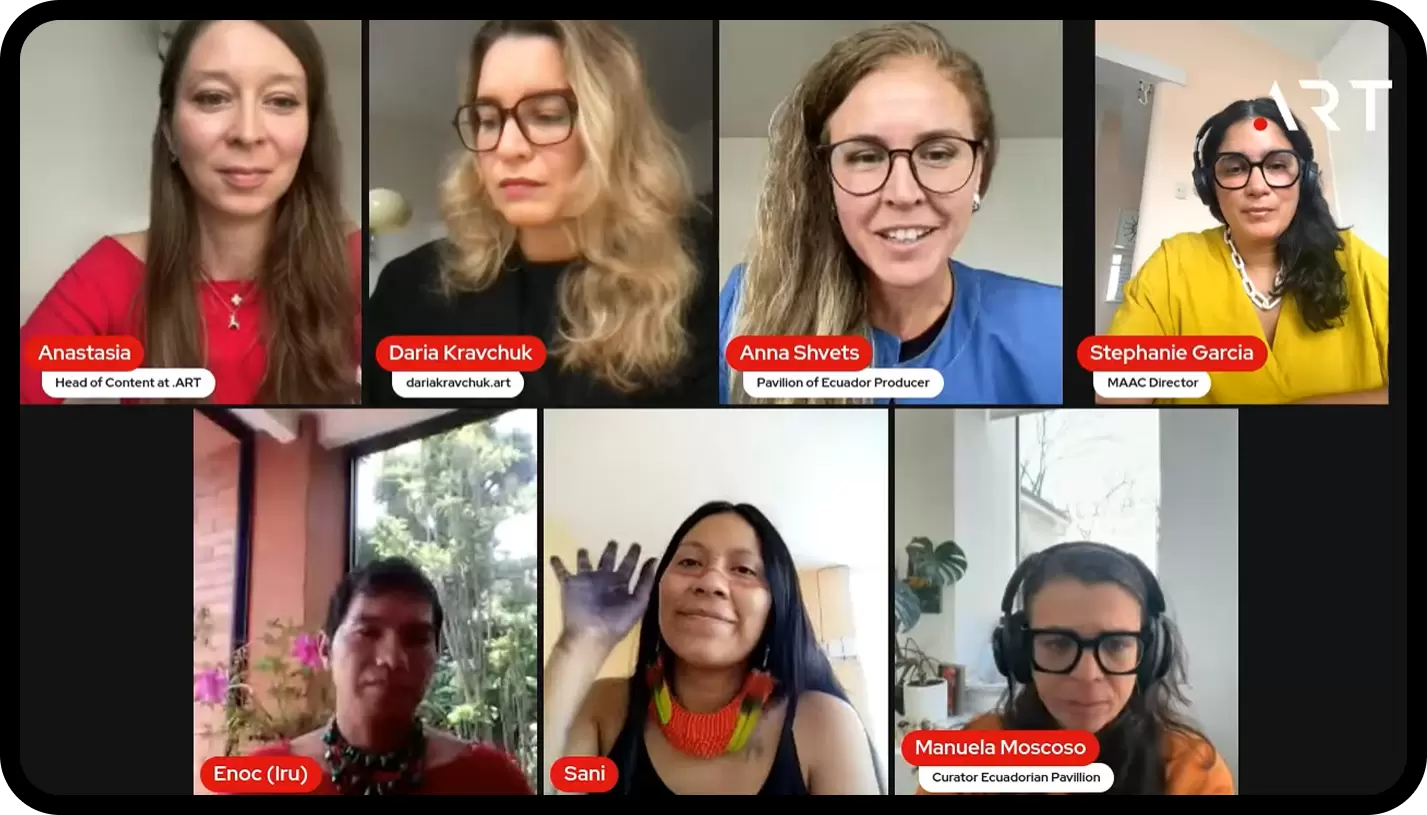
What does it actually take to bring a national pavilion to the Venice Biennale? Beyond the finished exhibitions lies a complex, high-stakes process—part logistics, part diplomacy, part creative vision—rarely seen by the public.
As the 2026 edition approaches, opening in May and running through November under the theme “In Minor Keys”, the focus this year turns toward quieter processes: intimacy, healing, and the subtle ways artists respond to the world.
But if the exhibition itself is about process, then the making of a Biennale pavilion is perhaps the most intense process of all.
The Biennale Is Not an Exhibition. It’s an Operation.
From the outside, the Biennale can feel like a series of exhibitions across Venice. In reality, it functions more like a temporary global system—where countries, institutions, curators, artists, producers, and funders all have to align within strict timelines.
For Ecuador, this moment is particularly significant. As Stephanie García Albán explains, the 2026 edition marks the first time the country’s participation is being led by a public institution—a shift from isolated representation toward something more long-term and structural.
“This is the first time Ecuador’s participation is being administered by a public institution… the result of more than two years of work.”
— Stephanie García Albán, Executive Director of MAAC and Commissioner of the Ecuador Pavilion
Behind that statement lies years of coordination: working with the Ministry of Culture, securing institutional support, aligning partners, and building a framework that can extend beyond a single edition.
Because participation at this level is not just about showing up—it’s about building the conditions to show up again.
What Happens Before the Art Arrives
By the time visitors step into a pavilion, most of the real work has already happened. Securing a venue in Venice. Managing budgets. Coordinating international teams. Navigating regulations. Handling production, transport, installation, press, and programming. Each of these layers runs in parallel—and depends on the others.
For Anna Shvets, a cultural producer and art manager overseeing the pavilion’s delivery, the process is less about linear execution and more about synchronization across multiple moving parts.
“We are acting like a spaceship… discipline is an essential ingredient because we’re working in many directions at once.”
— Anna Shvets, Producer of the Ecuador Pavilion
Deadlines are fixed. Time doesn’t expand. And even small delays can cascade across the entire project. This is where many artists underestimate what participation at this level actually requires. The Biennale is not just a platform for visibility—it’s a system that demands professional readiness.
Curating Beyond Representation
At the center of Ecuador’s pavilion is a curatorial approach that resists a simplified idea of “national identity.”
Manuela Moscoso, who leads the curatorial concept alongside her role as Executive Director of the Center for Art, Research and Alliances (CARA) in New York, approaches the pavilion not as a statement—but as a set of relationships.
“I’m not interested in themes as much as I am in the relationships that can be built between practices.”
— Manuela Moscoso, Curator of the Ecuador Pavilion and Executive Director of CARA
The pavilion brings together the Tawna collective and artist Óscar Santillán—not as a unified narrative, but as a dialogue between different ways of knowing and making.
One engages with questions of science, colonial histories, and global systems of knowledge. The other works directly from Amazonian territories, rooted in lived experience, memory, and ancestral cosmologies.
Rather than resolving these perspectives, the exhibition allows them to coexist—creating meaning through proximity.
Tawna: Process as Practice
That shift is especially visible in the work of the Tawna collective, an anti-colonial collective working from Amazonian territories. Their practice doesn’t separate art from life. It emerges through storytelling, ritual, everyday experience, and intergenerational knowledge—blurring the boundaries between artistic production and lived reality. What they bring to Venice is not just a finished body of work, but an entire way of working. At the same time, their participation carries a different kind of urgency. Their work becomes a way to communicate the realities of their territories—social, political, and environmental—within a global platform.
What Artists Often Overlook
One of the most practical insights from the conversation is how much participation depends on what happens outside the studio. Being selected is only the beginning. Artists are expected to collaborate with producers, respond quickly, deliver materials on time, and adapt to evolving conditions. Even for those working in remote contexts, responsiveness and reliability become essential. Because at this scale, no one is working alone.
And increasingly, that readiness extends to digital presence.
Curators, producers, and institutions need immediate access to an artist’s work, process, and context. A clear, well-structured online presence is no longer optional—it’s part of how artists are discovered, evaluated, and supported.
In an environment like the Biennale, where hundreds of projects compete for attention, clarity becomes a form of visibility.
More Than a Moment
What Ecuador’s pavilion ultimately reveals is that the Biennale is not a single moment in May. It’s a long-term investment. The goal is not just to participate once, but to open pathways—for future artists, curators, and cultural producers to follow. Because while visitors will experience the exhibitions over a few hours, the work behind them spans years.
Find out more about Ecuador’s pavilion here: pavilionofecuador.art